Wednesday, April 30, 2014

Botany of Desire

Are we the ones controlling plants? or are THEY controlling us?!?!?!!?


Here's what I learned after reading Botany of Desire,

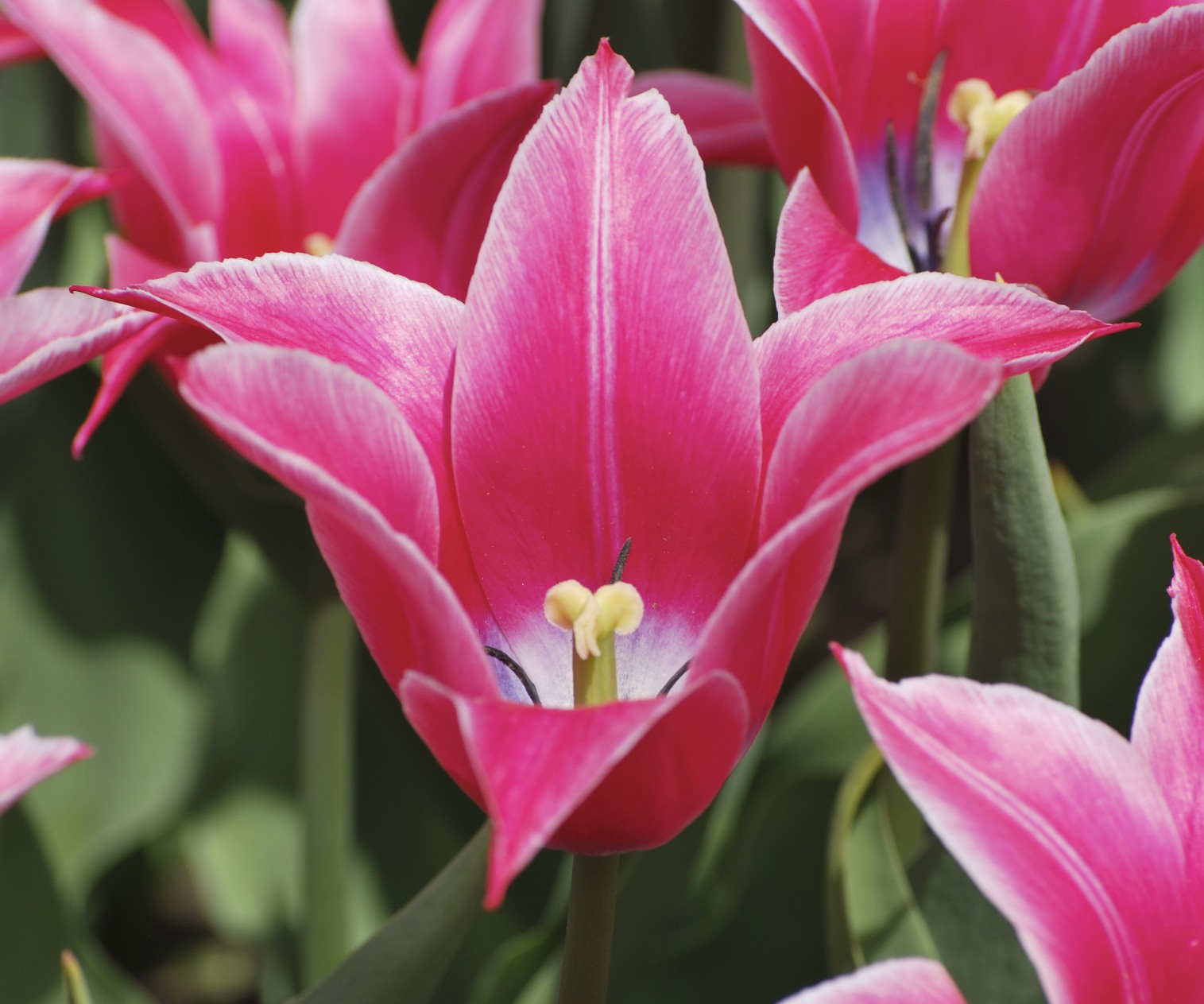
We all tend to think that we are the ones selectively breeding and controlling the gene flow of plants. It is always "I choose the plants, I pull the weeds, I harvest the crops" but really it is not as black and white as it seems. Why is it that plants have survived over so many years even though they cannot run or hide from predators? That is because they have evolved ways of multiplying quickly, whether it be sticking onto an animal's hide, or even having large seeds to be spread around. However, this can also apply to humans because plants evolve to survive and humans are the same as bees to them. Why is it that the tulip is so pretty that humans replanted it to keep the beauty? Why is it that potatoes are so substantial and delicious that humans continue to let it live? Why is it that the cannabis intoxicates you in such a way that you love it and repopulate it? These are all things that plants can do that aid in their survival. It's not just humans that control other things, plants control us too.

Thursday, April 24, 2014

Monday, April 21, 2014

HOLY CRAP FUNGAL INFECTION Savanahahahahah Pt.2

Oh my god, there's been a severe fungal infection of the acacia trees found in the African Savanna! The Day before I left on my plane back home, I encountered a patch of Savannah that had been utterly decimated by a fungus infection. Let me elaborate


There is a very quickly growing fungus called the Andrewmaoicusplumicusyam fungus or also called Sean Yang by the natives. What Sean Yang does is it clings onto an elephant's nose and slowly kills it off with nagging (a term used by the natives to describe the process of suffocation). Without elephants, Acacia trees grew without stop and matured freely. This caused an abundance of trees to grow which totally pushes out many grasses out of the way and prevents those grasses from growing plentifully. When many of these grasses don't grow plentifully, other herbivorous animals starve to death and then the entire ecosystem collapses because predators don't have enough prey to eat and also starve. For example, a zebra which is a primary consumer would be almost non-existent because the producers, grass, would not be there. Then, the lion, a secondary consumer, would starve because there would be no more zebra to eat. Animals that would be well adapted to this horrible tragedy would be tree eating animals such as giraffes so they wouldn't even bother with grasses. However, because there are now an abundance of trees that are not controlled by elephants, the savanna has almost completely erased and has been replaced by a forest. Because the place is a forest, the weather would be controlled and there would no longer be dry seasons and wet seasons and the place would transform into a forest completely.

Thursday, April 17, 2014

Savannaahahahhahahaha

Savannahahahahahas :)


Hello everyone, this is Jerry Mcdonalds here, the world's most famous savannah expert in the world as well as the heir to the popular fast food chain, burger king. I've been called many bad words and insults but recently I had a friend called me a savannah dummy. WELL THAT IS SIMPLY NOT TRUE. JERRY MCDONALDS IS A 100 PERCENT GENUINE SAVANNAH EXPERT. HE WILL SHOW YOU ALL. HE WILL PROVE THAT HE IS AN EXPERT. I WILL TRAVEL TO AFRICA'S SERENGETI PLAINS AND SURVIVE FOR MANY WEEKS TO PROVE TO YOU ALL. 


October 1,2014
There are many different kinds of savannas that are found throughout the world. Especially in Africa, where Savannas cover nearly half of the continent's surface. Rainfall ranges from 50.8 to 127 cm per year and  rainfall is concentrated within six to eight months of a year and then a period of drought. I am here during thunderstorm season, so i'm prepared to encounter lots of natural occurring brush fires because of the presence of sever thunderstorms and dry winds. Actually, fires are helpful because they are small enough to let larger animals escape while killing small insects with short life spans. This creates a feast for birds and lizards after the fires die off. Fires also cause a layer of fine ash to cover the floor. This creates a nutrient rich area that allows shrubs to grow rapidly during the spring seasons when rain is plentiful. It's blazing hot here too, every day ranges between  78° to 86° F(I live in Russia so 86° F is very hot). I've managed to come at a good time because the temperatures are falling while October still has summer rains. I'm lucky because when Savannas have their dry seasons(winter) grasses shrivel and rivers dry up so many animals migrate out and leave the Savanna so I won't be able to see nearly as many animals. I haven't seen much so far but i'll keep looking. I'm totally a savanna expert. 


Savannah's have very porous soil that drains extremely rapidly. It also has a very thin layer of humus which is organic material created from the decomposition of plant or animal matter.

FIRE
Fire is an essential part of a savanna's ecosystem. It provides nutrient rich soil, delicious toasted bugs for lizards and birds to eat and does little damage to trees due to many different adaptations such as grasses with very deep roots that are unharmed even if the top parts of the grasses are burned off. 


October 2,2014
Holy crap! I am crazy lucky! I saw a herd of zebra being chased by a lion today! What's amazing about these zebras is how they fend off other animals. When encountering their lifelong enemies, hyenas and lions, they will either bunch together so as to confuse the predator or run with the strongest males in the back to defend the herd. If all else fails, they use their sharp hooves and strong teeth to fend off predators. What's amazing about animals in Savannas is how they learn to adapt and coexist without a lack of resources. Most animals have long legs or wings to migrate during the dry seasons and there are many specialized animal species so not too many species fight each other for the same grasses to eat or the same prey to hunt. The savanna is a perfect place for buzzards and hawks because of the presence of hot air drafts and a wide open view of the Savanna. Many grazer species are able to share the same grazing area because they all eat different plants. The different plants they eat differ in height, time of day, as well as different places to go for the dry season. Even top predators such as lions help others. Whenever a lion makes a kill, it leaves a carcass for many scavengers such as hyenas and vultures to enjoy. They also help trim herds to keep populations in check as well as strengthening herds by killing off the weak and injured.


This is a food web of the grassland savanna that I drew all by myself because I am a Saharan Biome expert. As you can see, the producers are green plants that are consumed by primary consumers such as zebras and giraffes. Those primary consumers are then consumed by secondary consumers such as cheetahs that are not eaten by anything. The way Secondary consumers usually die is through starvation or sickness or old age and when anything dies, they are consumed by decomposers, detrivores as well as scavengers. 

October 3, 2014

Man, this place is simply beautiful. However, i've been thinking about it and it really makes me sad what we do to the beautiful Savanna. Farmers grazing their livestock in the same place tears the roots out of most of the grass that holds dirt and humus together. What this causes is loose dirt that is then blown away by the dry winds which cause deserts. Every year, hundreds of acres of savanna are destroyed and turned into deserts because of this.There is also a severe problem with poaching. Although there are many laws created to prevent poaching such as CITES which states the trading of endangered animals illegal, poaching still continues. Many poachers often set fires themselves to savanna brushes in order to clear the brushes and gain more vision. They also disrupt the food chain with their poaching. This poaching is a result of the great value of ivory and pelts.


October 4, 2014

It really is amazing seeing some of the ways animals are able survive. Giraffes with their long necks are able to reach the leaves other animals can't, ants instead of living underground live in whistling thorn acacia trees and protect themselves from other ant colonies by trimming stems and biting giraffes who come to close. Zebras with their stripes often are able to confuse their predators so they won't know where individual zebras are. It's all such a great intricate process. An amazing thing whistling thorn acacias do are how they conserve moisture. Their leaves have tiny leaflets called pinnae that selectively absorb sunlight and help continue photosynthesis. During the dry season, the acacia drops its leaves to conserve water and during the rainy season, they bloom flowers which have logn seed pods that are delicious for both animals and humans! Man they sure taste good.

October 5, 2014

I hate this place, I can't stand the everything. The Savanna sucks. I'm leaving now I don't care about my reputation as the most knowledgeable Savanna man. Goodbye forever.

Citations:

Pictures
Fire
http://cdn1.arkive.org/media/40/408665F6-1C14-4DE9-88BD-D813F40B2147/Presentation.Large/Grants-gazelles-near-fire-burning-of-savannah-habitat.jpg

Food Web
http://www.exploringnature.org/graphics/foodwebs/savannah_foodweb72.jpg

Monday, April 14, 2014

Animal Behavior Lab


                                    Study on the different behaviors and characteristics of pill bugs


Abstract
In this lab, we collected 10 pill bugs to observe their reactions toward different environments, determining what conditions they preferred and what senses they actually owned.We set up three different experiments consisting of two different connected chambers that gave 10 pill bugs the choice of going into whichever side they liked. We then recorded the number of pill bugs in each chamber every 30 seconds and recorded the numbers on a graph. In our experiment that tested pill-bugs sensitivity to wet and dry climates, we had a chamber that consisted of a wet floor(wet filter paper) and a chamber of a dry floor(dry filter paper). After recording seven minutes worth of data, we find that the majority of the Pill bugs prefer a dryer chamber. We then tested to see if the Pill-bugs could sense temperature by having a cold chamber of 0 degrees Celsius and a room temperature chamber of 22 degrees Celsius. After six minutes of observation, we found that there were equal amounts of pill bugs in each chamber(however that may be due to the fact that the pill bugs in the cold chamber seemed to be too frozen to move and migrate onto the room temperature side). This can also be called a kinesis where an animal moves randomly as a result of external stimuli. In this case, the cold temperatures made the pill bugs curl up and stop moving, probably preventing them from moving out of the cold chamber. Finally, our last lab tested the pill bugs sensitivity to taste as well as touch where we placed some honey in one chamber. After six minutes of observation, we noticed that the pill bugs tended to drift towards the Honeyed chamber of 8 to 2. This is an example of kinesis which is a specific action as a result to a stimulus where the pill bugs moved to the honeyed chamber in response to the sweet taste and scent of it. 

 
various senses of a pill bug

Introduction
In this lab, we will analyze the behavior of pill bugs or more commonly known as roly-polis. First however, we have to understand what behavior is. Behavior is an animal's response to sensory input and can be divided into two categories, learned and innate. An example of learned behavior is if a baby touches a hot pan, it knows not to touch it again because it hurt but an example of innate behavior is when a domesticated house cat who has never learned how to hunt pounces and kills a mouse. Another name for innate behavior "fixed action pattern" which essentially means instinctive behavior that is indivisible and runs to completion. There are two different questions that can be asked about behavior; proximate and ultimate questions. Proximate questions ask how an animal's mechanism works and ultimate questions ask why this happens and how it may have developed historically or functionally. An example of these questions can be seen with birdsong. A proximate question would be something like, how is a bird such as the brown thrasher able to sing more than 4,000 different songs? An ultimate question for bird songs would be why did the brown thrasher evolve to develop capabilities to sing more than 4,000 different songs? Another aspect of behavior is imprinting. Imprinting is related to the early stages of an animal's life where it becomes attached and begins to develop its own identity through what it sees. In young geese, when they are born, the first living they see becomes, in their eyes, their mother and they follow the  creature around. A proximate cause for this happenstance is the baby geese imitate their mothers by copying their exact movements and following them around. An ultimate cause for this idea is the baby geese follow their "mother" in order to learn how to survive and be able to pass on its own offspring in the future. 
 
These geese are imprinted that the man is their mother and follows him around

How do these pill bugs associate and act on those associations to move between chambers however? That is through either operant or classical conditioning. Classical conditioning is an involuntary response that ties a nonrelevant sense to another. For example, when a pill bug tastes honey and feels something sticky, it would associate sticky stuff to be sweet and tasty. Operant conditioning is different however in that this involves rewards and punishments to stimulate behavior. An example of this in pillbugs is every time a pill bug goes into the honey chamber, it realizes that it has something delicious to eat and decides to go there every time for sweet food.  

Question
Do pill bugs prefer a cooler environment?
Hypothesis
If ten pill bugs are placed in a two chambered structure with one chamber close to 0 degrees celisius, they  would stray more towards the cooler side because they are used to cooler and darker areas such as under rocks. 

Materials 
One soft brush
one two chambered structure
10 pill bugs
2 Ice Packs
1 Timer
2 thermometers

Procedure
1. Place filter paper in both chambers
2. Place ten pillbugs in middle of structure
3. Surround one chamber of the structure with 2 ice packs, one on top and one on bottom
4. begin timer and record the initial amount of pillbugs in each chamber
5. record for 6 minutes

Results                         Number in Cold Chamber         Number in Room Temp Chamber
Time (Mins)

0.0                                               2                                                           8
0.5                                               5                                                           5
1.0                                               5                                                            5
1.5                                               5                                                            5
2.0                                               5                                                            5
2.5                                               5                                                            5
3.0                                               5                                                            5
3.5                                               5                                                            5
4.0                                               5                                                            5 
4.5                                               5                                                             5
5.0                                               5                                                             5
5.5                                               5                                                             5
6.0                                               5                                                             5


This data shows that within the first thirty seconds of the experiment, three more pillbugs moved from the room temperature chamber to the cooler chamber. This shows that a large amount of pillbugs actively moved into the cooler chamber. However, this can also be an example of kinesis because the pillbugs may not have had the chance to move back as the cold chamber drastically slowed their movements and practically froze the pillbugs. 

Conclusion
Through this experiment, we can see that pillbugs are able to sense a cooler temperature, confirming the presence of touch as they were able to feel a cooler chamber. We also see that a large number of pillbugs voluntarily moved to the cooler chamber thus showing that some pillbugs do prefer a cooler climate. We kept both chambers dark so as not to add two different variables of light and dark but we still saw that the pillbugs were equally divided between room temperature and cooler temperature chambers. We also saw that while in the cold chamber, the pillbugs were stacked on top of each other, and mostly curled. That might have been an instinctive mechanism triggered when they found the chamber to be cold. This shows that some pillbugs may have a preference for a cold chamber but some could also have a preference for the room temperature chamber. A common mistake we may have made is the pillbugs may have randomly moved about and froze while in the cold chamber and making them unable to move back into the room temperature chamber. 


Sunday, March 9, 2014

Quiz

How does the immune system provide an immediate nonspecific immune response

The immune system does a number of things to provide an immediate nonspecific immune response. There are skin cells and mucus membranes that are able to prevent many pathogens from entering the body.
Skin has a low pH, fatty acids, and salts found on it that serve as chemical barriers to prevent infectious invaders from entering the body. The first thing the immune system does is to use mucus to sweep out the pathogens before even knowing what the bacterium is but there is a completely different process for when invaders
Inflammation

When skin is pierced and something punctures a body cell, it releases chemicals such as histamines that tell white blood cells, natural killer cells, and Phagocytes such as macrophages to surround and destroy foreign microbes. Then, fluid moves into the area which explain the swelling of the inflamed area, the local blood vessels are now leaky and blood vessels are dilated in order for a greater chance for infection fighting cells to enter the area. Phagocytes then consume bacteria and cell debris, healing the tissue. Phagocytes consume bacteria by finding the carbohydrates found in the bacteria, surrounding them and using lysosomes to kill and digest the bacteria. The kinds of chemicals that are released during tissue injury are histamine, prostaglandins, kinines, complement, and cytokines. These mediators work to increase blood flow by increasing the metabolic rate which explain the redness and heat. Then, they make local capillaries permeable which swell and make the area very sensitive to pressure. This brings oxygen and nutrients into and clotting proteins into the area. Also, mediators such as histamine help in phagocyte mobilization.


Here is an interesting picture to see what happens. Summary of what I explained.


T and B cells in infections

T and B cells are very different.
There are two types of T and B cells, there is a t helper cell that activate B cells and receive information from macrophages and cytoxic T cells that target and destroy infected cells. B cells are divided between memory cells that remember the shape of antigens and antibody b cells that create antibodies to attach to antigens that stop them in their tracks and tell killer cells to get rid of them. Memory B cells recognize these antigens by their shape and when they deal with them, they remember the shape of the antigens and are more prepared the second time the antigens appear again. Antibody B-cells are present to create Y shaped proteins called antibodies that stick to foreign invaders and that alert the body to the invader's presence. Basically, this is a watch guard that is yelling "HEY LOOK THERE IS A BAD GUY HERE KILL HIM". Phagocytes, natural killer cells, and cytoxic T cells then kill and destroy the intruders or infected covered with antibodies. T cells are activated when a phagocyte eats a foreign substance and takes it to the spleen to figure out what it is. The T cells kill the invader and the b cells create antigens that are able to bind to the invader. When it happens a second time, this is able to be done much faster because the b cells remember the shape of the invader now. This is why we have antibiotics and vaccinations so B cells can get the shape of the disease without actually getting the disease and be able to react to the infection much faster than it usually would

Notice this how a helper T cell receives information and activates other cells. .


The entire process. Notice how the Helper T cell is the first thing that receives the antigen and stimulates the B cells and memory T cells and Memory B cells.


T and B cells against themselves?

T and B cells can distinguish invader from self because the ones that distinguish molecules in our body have been destroyed while in the womb. The rest are memory cells that are trained to identify new invaders that enter the body rather than cells that already exist in the body.

T and B cells work together to remember invaders through shape and attack them when they recognize them.

Every cell also has a major histocompatibility complex(MBC) that is able to tell T and B cells if they are targeting themselves or not. This is why we cannot simply just accept someone else's liver because their liver's MBCs are different from ours and will be rejected by our body and attacked because our body will think the liver is a foreign invader.

Notice the MHC present that tells T and B cells it is self.


Lecture Overview


Glucose
Glucose is absorbed through the ileum and Jejunum and when blood Glucose is found to be too high, beta cells within the pancreas release insulin hormones that target Body Cells. They bind to receptors on top of these cells because they are not fat soluble. When Insulin binds to these receptors, it triggers the Cells to absorb Glucose which lowers the amount of glucose in our blood. Insulin also targets the liver to Produce Glycogen which are hundreds of Glucose molecules bound together and is stored in the liver and muscles. When blood glucose levels begin to lower below the optimum level, the body then breaks down the glycogen stored in the liver and muscles into glucose and releases it back into the bloodstream. The way Glycogen is created is through the process of Dehydration where substrate glucoses turn into product Glycogen through the use of enzymes. When Dehydration occurs, we are able to lower our Blood Glucose level. Opposingly, we can use Hydrolysis that uses an Enzyme, H20 and ATP to convert glycogen back into many Glucose molecules in order to raise our Blood Glucose levels.We also went over Protein synthesis and how many things could effect a strand of DNA to mutate it through Pt Base mutations, Frameshifts that involve deletions, insertions and duplications. During Protein Synthesis, we go from DNA to mRNA to Amino Acids and the first stage is Transcription where the DNA, a two stranded nucleotide is changed into mRNA, a one stranded nucleotide through the work of RNA Polymerase that reads the strand from 3' to 5' and lays down the mRNA from 5' to 3'. RNA Processing then occurs where Splisosomes cut out introns and a G cap and a poly A tail is placed on the mRNA strand to protect it from nucleases that constantly eat nucleotides in order to protect the body from foreign viruses. We then go to Translation where mRNA enters a ribosome that is found on the rough part of the endoplasmic reticulum and is read by codons and goes through a sequence of APE, A as accept, P as peptide bond and E as exit to go on to create proteins.

Muscular System and Calcium
There are 2 types of proteins, Actin and Myosin.. Actin is thin and Myosin is thick. Actin is a Globular Protiein that is helix shaped and Myosin is a Linear Protein. The way a muscle works is for the Myosin heads to be able to touch the actins but to do that we require ATP. With ATP, when it binds onto the myosin head, it hydrolyzes into ADP and a Phosphorous molecule and energy that essentially spring loads the myosin to move whatever it is attached to and eventually move the entire muscle when this process occurs repeatedly. How do we create ATP you ask? Well, it all starts with food entering the mouth where salivary amylase and the duodenum breaks down carbohydrates into disacharides through disacharidases called sucrase lactase and maltase that break down glucose, fructose and galactose. We then use glucose through glycolysis in the cytoslol to create 2 three carbon molecules called pyruvates that generate 2 ATP and 2 NADHs and going into the mitochondria we have the kreb's cycle that change the pyruvates from 2carbons to six carbons to four carbons to create 2 ATPs, Nadhs, and FADH2 s and this then goes through oxidative Phosphorylation where the electron transport chain accepts an electron and attracts protons and going through chemiosmosis where the Hydrogen proton goes through ATP Synthase to create 36 ATPs in optimum conditions. Now we use Calcium to move Tropomyosin to expose myosin binding sites on actin heads and causes the muscle to move. We have salt to polarize this process with sodium, potassium and chloride that create an electrical current to move the myosin binding sites. This entire process stimulates muscle movement.